End Of The Trail Sculpture 13.5 " High
Few sculptures have captured the emotional weight of the American frontier quite like End of the Trail. Originally sculpted by James Earle Fraser for the 1915 Panama-Pacific International Exposition in San Francisco, the work became one of the most recognized images associated with the closing chapter of the Old West. Fraser, who spent part of his youth on the Dakota frontier, witnessed firsthand the hardships faced by Native peoples during a period of immense cultural upheaval. Those early impressions deeply influenced his artistic voice.
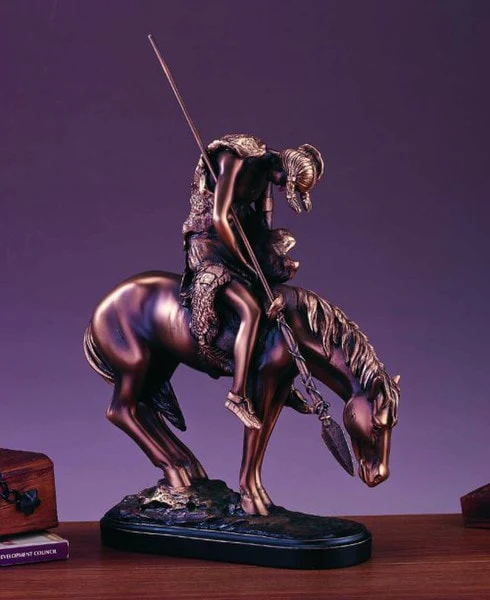
The sculpture portrays a weary Native American warrior slumped forward on his exhausted horse, his spear lowered, his posture heavy with quiet resignation. Rather than dramatizing conflict, Fraser conveyed solemn dignity and profound humanity. The bowed head and drooping spear symbolize not defeat in battle, but the fading of a way of life under the pressures of westward expansion. Its unveiling at the 1915 exposition struck an emotional chord with visitors and quickly became an enduring icon of American sculpture.
This exclusive adaptation for Statue.com respectfully captures the spirit and poignant detail of the original—from the powerful musculature of the horse to the subtle curvature of the rider’s shoulders and the downward sweep of the spear. Cast in quality designer resin and finished in a rich faux bronze patina, the piece evokes the timeless presence of the monumental original while offering accessibility for collectors of Western art.
Measuring with a base size of 9.5" W x 4" D x 0.5" H, this sculpture makes a striking statement in a study, office, library, or Western-themed interior. It serves as both an artistic focal point and a meaningful conversation piece about American history and cultural remembrance. A thoughtful gift for collectors of Western heritage art, historians, or admirers of classic American sculpture.
Disclaimer: Our artwork is inspired by traditional Southwest art but is not an Indian product or the product of a particular Indian tribe or organization.
Original: $225.00
-65%$225.00
$78.75Product Information
Product Information
Shipping & Returns
Shipping & Returns
Description
Few sculptures have captured the emotional weight of the American frontier quite like End of the Trail. Originally sculpted by James Earle Fraser for the 1915 Panama-Pacific International Exposition in San Francisco, the work became one of the most recognized images associated with the closing chapter of the Old West. Fraser, who spent part of his youth on the Dakota frontier, witnessed firsthand the hardships faced by Native peoples during a period of immense cultural upheaval. Those early impressions deeply influenced his artistic voice.
The sculpture portrays a weary Native American warrior slumped forward on his exhausted horse, his spear lowered, his posture heavy with quiet resignation. Rather than dramatizing conflict, Fraser conveyed solemn dignity and profound humanity. The bowed head and drooping spear symbolize not defeat in battle, but the fading of a way of life under the pressures of westward expansion. Its unveiling at the 1915 exposition struck an emotional chord with visitors and quickly became an enduring icon of American sculpture.
This exclusive adaptation for Statue.com respectfully captures the spirit and poignant detail of the original—from the powerful musculature of the horse to the subtle curvature of the rider’s shoulders and the downward sweep of the spear. Cast in quality designer resin and finished in a rich faux bronze patina, the piece evokes the timeless presence of the monumental original while offering accessibility for collectors of Western art.
Measuring with a base size of 9.5" W x 4" D x 0.5" H, this sculpture makes a striking statement in a study, office, library, or Western-themed interior. It serves as both an artistic focal point and a meaningful conversation piece about American history and cultural remembrance. A thoughtful gift for collectors of Western heritage art, historians, or admirers of classic American sculpture.
Disclaimer: Our artwork is inspired by traditional Southwest art but is not an Indian product or the product of a particular Indian tribe or organization.